
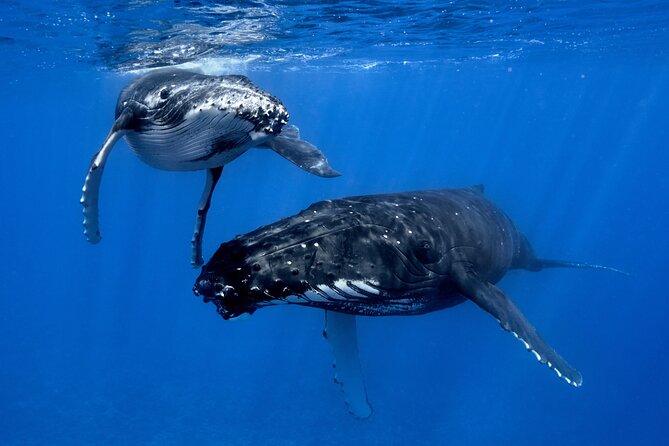
Reviewed · SWIMMING WITH WHALES
WHALE TOUR – Watching and Swimming with Whales
Moorea’s humpback season is already special, but this experience turns the volume up by aiming for the rare part, swimming alongside the whales, not just watching from a boat. I like the small-group setup and the fact that the guide only launches when weather and whale behavior look good. One thing to keep in mind: it’s a real open-ocean activity, so sea state, wind, and even rain can affect comfort and timing.
I also like that the crew talks safety like it matters, and the vibe comes through as respectful of the ocean, not a grab-and-go thrill. Names that show up often in the team are guides like Henua and Nicolas, and they seem to focus hard on getting everyone through calm, controlled sessions. The possible drawback is simple: not everyone may go in the water, and the experience can include waiting while they search and observe.
Key highlights before you go
- Safety and launch timing: the guide waits for favorable conditions and how the whales are acting
- Small group size: maximum 6 travelers, which usually means less chaos in the water
- You might swim multiple times: the crew aims for several opportunities, when the whales allow it
- Respectful whale etiquette: they stress humility, safe distances, and animal-first behavior
- Open-air boat: no shelter from wind or rain, so expect the elements
- Real guide effort: in some cases the guide will coordinate with other boats and adjust the plan
Humpback Whales in Moorea, the Moment You Realize You Came for More Than Photos
Moorea has a way of making you slow down. You see the lagoon, the mountains, the water texture changes with every turn. Then you head out for humpbacks, the giants of the Pacific, and suddenly your mental checklist becomes something else. You’re watching breathing, listening for surface rhythm, and trying to stay calm while the boat finds the right patch of ocean.
What makes this tour stand out is the goal. It is not only a whale sighting trip. The crew is set up for watching and swimming when conditions and animal behavior line up. That changes everything, because swimming is controlled by safety rules and the whales’ choices, not by a set schedule.
Also, this is a small-group format with a max of 6 travelers. That matters. Less crowding on the boat means you spend more time being positioned well and less time squeezed into awkward angles while the crew tries to track movement.
More Swimming with Whales in Moorea
- Swimming with Whales in Moorea (Half Day tour)
★ 4.5 · 264 reviews - Whale Tour – Observe and swim with whales
★ 5.0 · 257 reviews - Swim with humpback whales
★ 5.0 · 224 reviews
The Boat Ride Reality Check, Open-Air Comfort and Sea Conditions
This tour runs from a small boat. A key detail from real experiences: it can be open-air, with little or no protection from the elements. That means your “what should I wear” answer is not just about style. It’s about wind chill, rain, and how you handle boat spray.
If the day is rough, the ride can feel tiring, even if you’re not swimming. One of the clearest pieces of advice you can take from the experiences is to plan for sea sickness if you’re sensitive. Some people bring medication like gravol when conditions are choppy.
So here’s the practical angle: you can be excited and still prepare your body. If you know you get nauseous on boats, treat that as a mission, not a surprise. If you run cold easily, pack for it, even in summer.
Meeting Point and How the Timing Usually Feels (It’s Not an Exact Clock)
The tour starts at Quai des croisières G56J+9VV, Moorea, French Polynesia, and it ends back at the same meeting point. Duration is listed as about 4 hours, but on-water wildlife time is never a strict stopwatch.
In practice, the time often has two phases:
- Getting into the whale area and waiting while the guide observes.
- When the conditions are right, launching into the water for swimming sessions.
Waiting can be part of the deal. When the guide is serious about animal-first behavior, you do not just rush into the water. You watch. You wait. Then you move when the plan becomes safe.
If you’re the type who hates “waiting around,” this is the only part of the tour that can feel frustrating. The upside is that waiting is what keeps the whole experience from becoming uncontrolled chaos.
How the Crew Makes Launch Decisions (Weather and Whale Behavior)
The tour’s guiding philosophy is simple: launches happen only after observing that weather conditions and the behavior of the animals are favorable. This is the backbone of the experience.
That line matters because humpbacks are not predictable like a theme-park attraction. They come up, breathe, change direction, and sometimes drift into a position that makes close swimming either possible or not possible.
A strong guide handles that in two ways:
- They watch whale behavior for the right moment, not just the right location.
- They keep the group moving in a way that supports safety and keeps you from panicking.
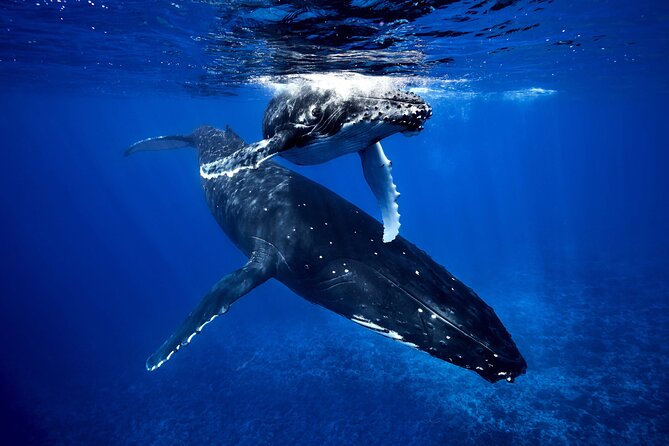
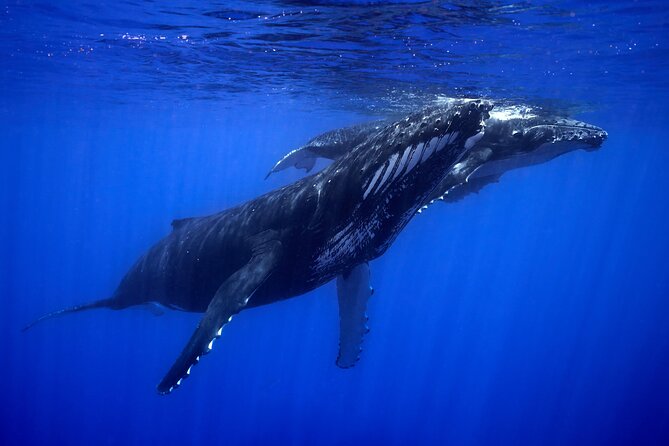
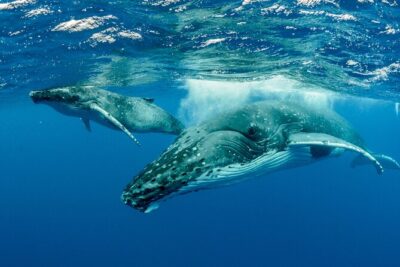
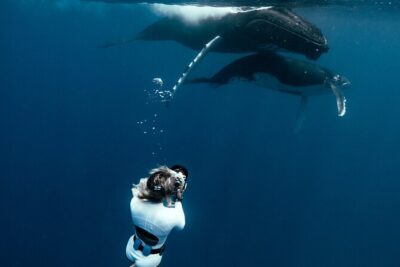
In the best scenarios, you get close enough to experience the whales as real animals, not just dots on the water. In many cases, the whales show up as mother and calf pairs, and that’s what people describe as emotional and life-changing.
A different way to spend a day on Moorea:
- Moorea 6-Hour Snorkeling and Lunch Shared Tour
★ 5.0 · 1,758 reviews - Moorea 4WD Tour Inc. Belvedere, Pineapple Farm, Magic Mountain…
★ 5.0 · 967 reviews - Snorkeling excursion, discovery of the lagoon, small group.
★ 5.0 · 861 reviews - Franckyfranck Tours Moorea – Half day Tours
★ 5.0 · 817 reviews
Swimming With Humpbacks, What You Need to Be Ready For
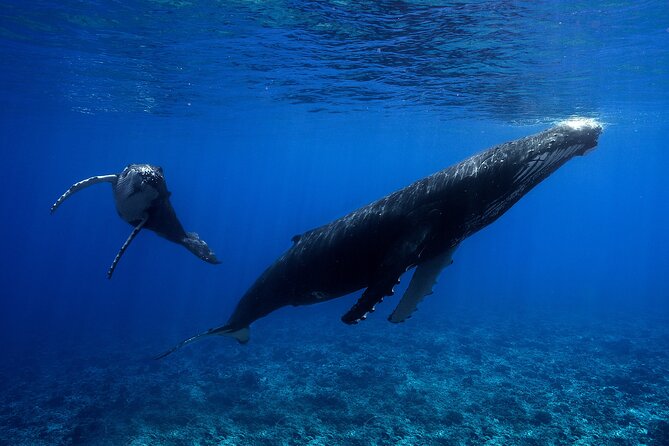
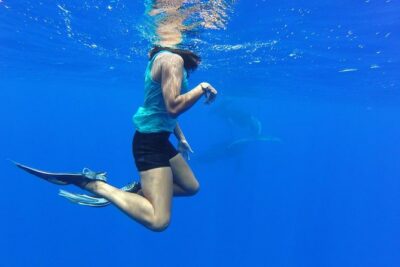
Swimming is the headline. But it is also the most physical part of the day. You should have at least a moderate physical fitness level, and you should be a reasonably confident swimmer.
From real experiences, swimming can be demanding because you may deal with:
- waves and current
- the effort of staying close while using snorkel gear
- the stamina to handle repeated in-water sessions
One reviewer even called it strenuous while also noting that watching from the boat was already great, which is a helpful mindset. If you feel unsure, remember this is still a whale-watch tour. Swimming is the extra goal, not a requirement to have a win.
The in-water limit you should plan around
There’s also a crucial detail about who can get into the water at one time. Some experiences describe a maximum of six people in the water at a time, with a guide. That affects expectations.
Even if your group is max 6 travelers, the crew may still rotate based on comfort, skill, and timing. So if you book this hoping everyone in your party will swim for the same length of time, you should adjust that expectation. The crew’s job is to run safe sessions, not to guarantee identical minutes for everyone.
What You Actually See Out There, More Than a Quick Breather
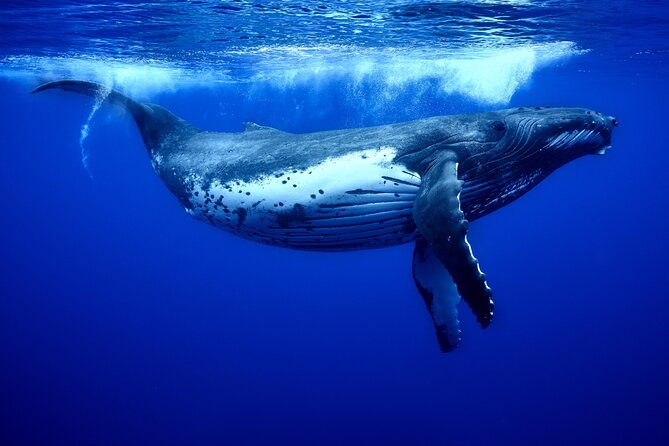
On a good day, you can see multiple whales. In the accounts tied to this tour, people often spot humpbacks from the boat first, then get a chance to swim when the whales behave well.
The “wow” moments tend to be specific:
- a mother and baby pair getting close
- whales surfacing near your position so you can watch the movement
- the feeling of being in the water with the animal’s presence, not just a glimpse
One of the most repeated stories is the mother-and-calf encounter. That tends to happen when the whales are relaxed enough to give the crew a safe window.
Also, the crew doesn’t rely only on their own eyes. In some experiences, the guide appears to coordinate with other boats to find sightings, and in at least one case, they extended the tour so the group could get a better chance.
That is a big deal for value. It means the crew is not simply going through the motions. They are working.
The Guide and Captain Dynamic, Why It Feels So Tightly Run
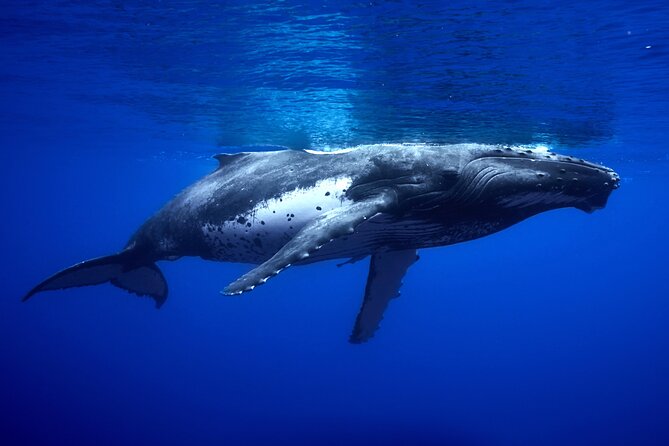
You can feel a well-run tour before you ever get in the water. The team manages the flow.
Names that show up from multiple experiences include guide Henua and captain Nicolas (sometimes spelled slightly differently), along with other guides named Johan and Niko.
What you should look for in a top crew is how they handle two things at once:
- whale etiquette, keeping distance and respecting animal behavior
- human logistics, keeping the group together and safe, especially during transitions
People repeatedly described the guides as attentive to safety and group cohesion. That shows up in practical ways, like guiding your position in the water and helping you get through each session without rushing.
There is also a small but noticeable “care” factor. Several reviews mention kindness after long waiting or rough conditions, and one even called out how the team helped when communication with the hotel was tricky for cruise passengers. That matters because in a faraway place, the difference between smooth and stressful is often just one phone call.
Practical Gear and Personal Prep That Will Save Your Day
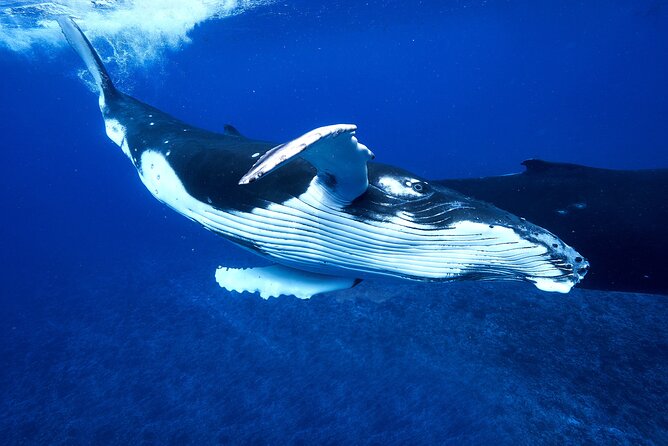
This tour does not pretend to be a casual swim class. You’re on a moving boat, in changing weather, and you might get splashed.
Here’s what I’d do to set yourself up for success, based on what the experience demands:
- Bring a swimsuit and a quick-dry layer that you can get back into fast.
- Expect to get cold if it’s rainy or windy. Open-air means wind chill can happen fast.
- Use an anti-sea-sickness plan if you’re prone to nausea. If you’ve used medication before, now is the time to be prepared.
- If you’re not a strong swimmer, set a target to be happy watching from the boat. That is still whale time, and you won’t be dragging the group’s safety plan.
- Practice calm breathing. Snorkel sessions are easier when you stay steady rather than trying to sprint for position.
One helpful note from the experiences: goggles and snorkel gear can be awkward in waves. Go in expecting to adjust and re-fit calmly.
Value and Price, Is $327.95 a Fair Deal?
At $327.95 per person, this is not a “cheap whale trip.” So the real question is value, not sticker shock.
This tour is priced high because it’s doing three expensive things at once:
- running a small group boat charter
- prioritizing safety and animal-first rules that limit how often and how close you can go
- providing guided in-water sessions when conditions allow
When the tour works, the payoff is huge: a close encounter with mother-and-calf humpbacks, calm guidance, and multiple chances to swim. People also mention the crew’s effort to coordinate sightings and even extend the tour in some cases. That kind of effort is hard to price until you’re the one on the boat hoping for a whale.
When it does not fully work, you still get whale watching from the boat. But swimming time and closeness can vary, and you might feel like you paid a lot if you only got brief water time or a less-close encounter on that day.
So I’d frame it this way: pay for the crew behavior and the “try hard” attitude. If that matches your priorities, it can feel worth it. If your absolute must is long swim time in perfect calm conditions, no operator can guarantee that, because whales decide.
What If You Can’t or Don’t Want to Swim?
This tour is built around swimming, but it is not only for swimmers. You might spend time watching from the boat, especially when the crew rotates in-water participants.
That’s not a failure mode. It’s part of the safety logic when conditions and whale positioning allow only limited people in the water at once.
One mixed-experience point to know: if someone in your group does not swim, others may still go in based on safety and the operational flow. That can affect how fair it feels if you expected equal access. On the flip side, the crew’s responsibility is animal rules, not equality-by-minute.
Your best move is to be honest with yourself before the day. If you’re a confident swimmer, you’ll likely enjoy the water time more. If you’re unsure, you can still have a great whale day from the boat, especially if the crew spots whales well.
After the Whale Time, How the Day Wraps Up
The tour ends back at the meeting point. Some experiences mention getting taken around calmer areas after the main whale focus, which can be a nice way to settle your body after bouncing around on open water.
You may also get small comforts aboard. One repeated detail is that the boat includes drinks such as water, juices, and beers. That’s not the reason to book, but it does help make the long day feel easier.
And yes, the waiting part can be real. I’d treat the whole half-day as a whale mission, not a quick stop between shopping.
Who This Tour Fits Best
This is a great fit if you:
- want humpback whales in a small group setting
- are excited about possibly swimming when conditions allow
- care more about safety and respect than selfies at all costs
- are comfortable with open-water realities, including wind and possible rougher seas
It might not be the best fit if you:
- hate cold weather at sea and do not want an open-air boat experience
- are easily seasick and have not planned for it
- need a long, guaranteed in-water session no matter what the whales do
Quick Booking Advice, How to Pick the Right Day
Since the tour requires good weather, your best scheduling strategy is simple: choose the day you think you’ll have the most stable conditions. If your trip includes multiple days in Moorea, you’ll have flexibility, and that increases your odds.
Also, if you’re arriving by cruise and worry about communication, take reassurance from how the crew has handled last-minute contact in real situations. Still, I’d make sure you have the operator’s contact info and your meeting details saved offline.
Should You Book This Whale Tour?
I’d book it if your priority is a safe, whale-respectful humpback experience and you’re genuinely interested in swimming when the guide calls it. The combination of small-group format, serious safety decisions, and crews like Henua and Nicolas getting you into the right moments is exactly what you want in Moorea.
I would not book with blind faith that you will swim for a long time. Whale encounters are weather- and animal-driven, and the day can include waiting and rotating in-water participants. If you can accept that, and you’re ready for open-air conditions and a moderate fitness effort, this is one of those once-in-a-lifetime style tours that actually earns the hype.
FAQ
Where is the meeting point for the tour?
The tour meets at Quai des croisières G56J+9VV, Moorea, French Polynesia.
How long is the whale watching and swimming tour?
The duration is approximately 4 hours.
How big is the group?
The tour has a maximum of 6 travelers.
Is pickup available?
Yes, pickup is offered.
How will I receive my ticket?
You get a mobile ticket.
What fitness level do I need?
The tour asks for a moderate physical fitness level.
Is the tour dependent on weather?
Yes. It requires good weather. If it’s canceled due to poor weather, you’ll be offered a different date or a full refund.
Do I get confirmation after booking?
You receive confirmation at the time of booking.
What is the cancellation policy?
Free cancellation is available up to 24 hours in advance for a full refund.
If I cancel late, will I get my money back?
If you cancel less than 24 hours before the start time, the amount paid is not refunded.
Recently reviewed around Moorea
- Whale watching and snorkelling in Moorea★ 5.0 · 64 reviews
- Yoga at sunrise at Sofitel Moorea, overlooking Tahiti★ 5.0 · 3 reviews
- You drive, I guide you★ 5.0 · 26 reviews
- Jet Ski Moorea Customed Tour only★ 5.0 · 247 reviews
- moorea tubing★ 5.0 · 12 reviews
- Moorea citycoco tour: The most beautiful beaches!★ 4.5 · 62 reviews
- Whale Watching Moorea (non-swimming)★ 4.0 · 12 reviews
- Whale watching 6 people half day★ 5.0 · 38 reviews
Swimming with Whales, compared.
Swimming with Whales in Moorea (Half Day tour)
Read our review →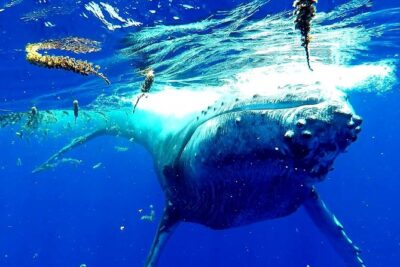
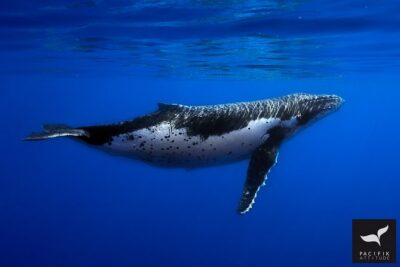
Humpback whale watching and marine life in Moorea
Read our review →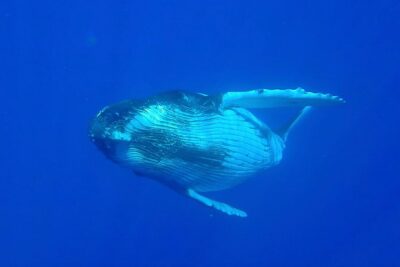
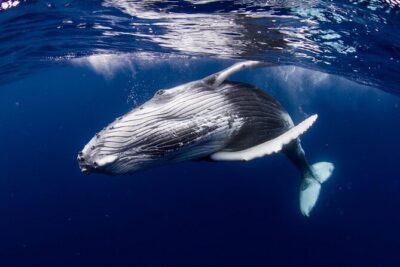
Private tour observing and swimming with humpback whales in Moorea
Read our review →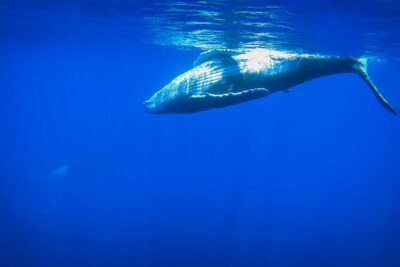
Browse the lists this trip appears in